For most people in Africa, ‘a job’is really an issue of self-employment. Jobtech newbies can sometimes forget that a large part of the jobtech taxonomy is platforms that enable Africa’s 43 million+ solopreneurs, nano, micro and very small businesses to thrive. From restocking and inventory tools to digital bookkeeping and delivery coordination, platforms can bring order to disorder. They can help businesses track, plan, and trade with more confidence. This can increase take-home incomes, which is particularly important for women who dominate microenterprises across the continent.
But doing this is so much more complicated than e-commerce.
An African E-Commerce 101 lesson would probably start with the Jumia story – ‘Africa’s Amazon.com’. Over $1bn raised. A high-profile IPO on the New York Stock Exchange. The need to build the entire e-commerce rails: from payment to logistics. $2bn in losses. 6 countries closed down. While the new CEO has done a remarkable job of improving Jumia’s fortunes, and China-based Temu and Shein still have their eyes firmly on the African continent, for over a decade, we have been left with a firm conclusion that the typical e-commerce marketplace model doesn’t quite work for Africa. Trust deficits are high, among both customers and sellers. Delivery and logistics make unit economics impossible. Just sorting payments is hard enough.
African E-Commerce 201 would probably focus on the second generation of African e-commerce: B2B retail. ‘African retail happens at the last mile’, was the logic. ‘We need to enable that to be cheaper and more efficient’. A swathe of platforms offering supply chain for FMCG retailers emerged – Wasoko, Alerzo, TradeDepot, to name a few – and raised huge amounts of funding when VC money was awash on the continent. The unit economics can be challenging, though, and while these models can offer major potential, they are deceptively different despite looking similar on their face.
So what is the African E-Commerce 301 lesson? I would argue that it looks rather like our new Jobtech Alliance Microenterprise Sector Scan. The core of this comes in understanding the value leakages that define microenterprise operations in Africa, and how platforms can help to plug those leaks.
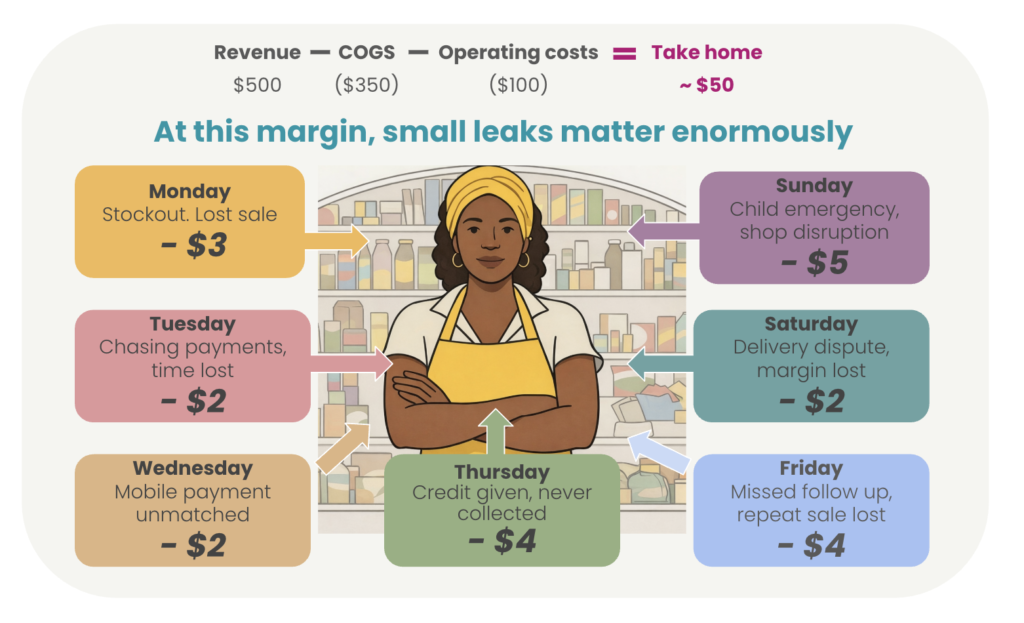
Where earlier products digitised isolated tasks and plugged specific leaks, the next generation of platforms is beginning to run the whole workflow of the microenterprise. It is only by doing that that microenterprise platforms will truly be able to deliver on the promise that African e-commerce has been chasing for over a decade.
Until next time,
Chris

📣 Highlight of the month
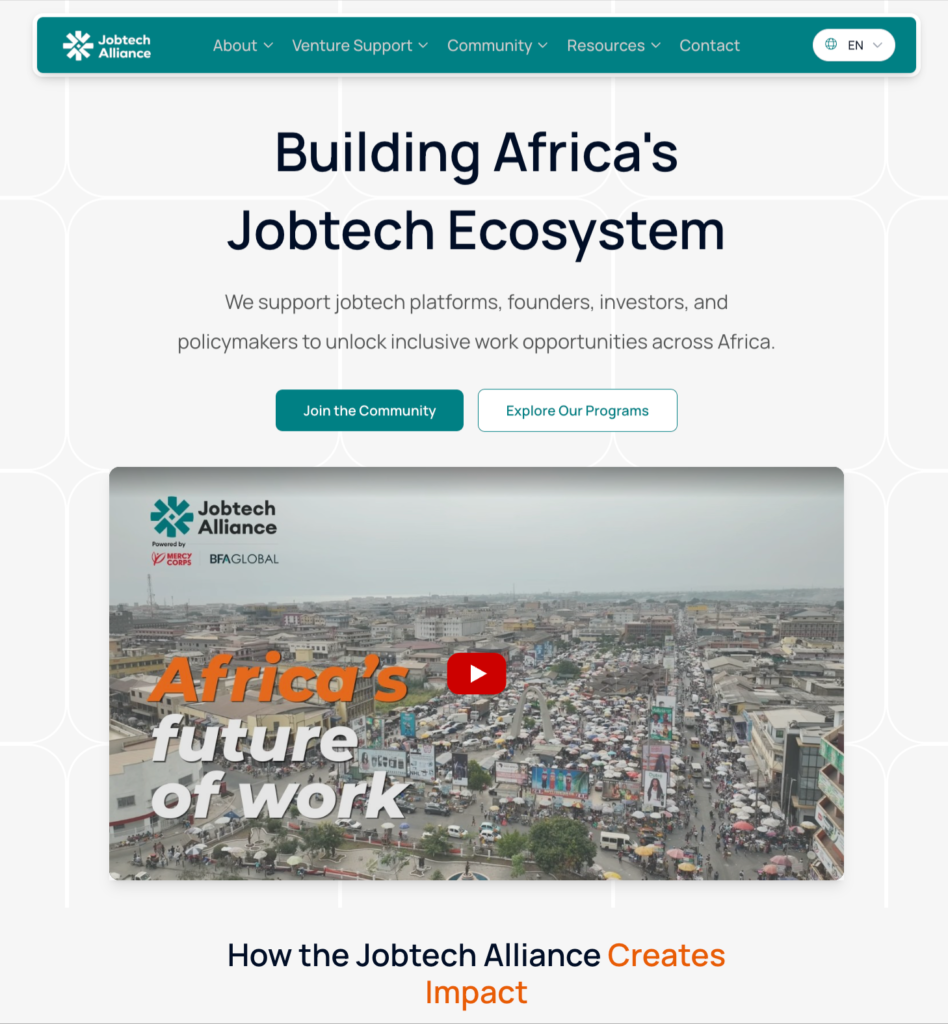
We’ve launched a new-look Jobtech Alliance website. The site better reflects our ecosystem-driven nature — featuring the jobtech platforms doing the heavy lifting across the sector, the portfolio companies we support, and a growing library of 100+ blogs, scans, and learning studies. It’s all built to share practical insights from our work across the ecosystem.
🔧 Built by our members
This month, we chatted with Marvin Kiragu, founder and CEO of Luka, a last-mile neobank designed for Africa’s migrant workforce, solving three major financial barriers: high agency fees, lack of credit, and limited tools to build wealth.

What are you building?
We are building the financial infrastructure that migrant workers and recruiters rely on before deployment. By integrating pre-departure loans, savings tools, and employer-linked repayment structures, we reduce drop-offs caused by upfront migration costs and improve the reliability of candidate pipelines.
Our model works because lending is tied to verified recruitment partners, structured milestones, and salary-based recovery – allowing us to underwrite risk more accurately than traditional consumer lenders.
What are your top 3 insights building Luka?
- Labour mobility is a multi-jurisdiction problem by default – Operating across corridors means navigating multiple regulatory environments, each with different rules, incentives, and points of failure.
- Risk is hard to price when information is fragmented – Information asymmetry makes it difficult to quantify and underwrite risk. The advantage comes from controlling more of the system – from recruitment partners to repayment flows, so you can turn fragmented data into something you can actually price and manage.
- This is a high-risk, low-trust industry – Labour migration comes with real reputational risk—worker abuse, human trafficking, fraud, and exploitation. Building here requires more than product; it requires strong partners, clear safeguards, and constant vigilance.
🚀 Founder resources and opportunities
- Renew Capital is running the embedded finance series, which is a program for tech founders ready to add embedded finance (credit, lending) to their platform. Check it out.
- Acumen and the Mastercard Foundation have launched Green RISE Africa , a five-year programme supporting green entrepreneurs across 15 African markets. It includes a six-month fellowship, an accelerator, and access to funding, with the goal of creating over 443,000 work opportunities for women and youth. Register your interest here.
🗞️ Who’s making the news
Platforms for offline work
- Angola’s ANDA, which offers a “drive-to-own” model for two-, three-, and four-wheeled vehicle drivers, has raised $1.2M in a seed expansion round from BFA Asset Management’s Kimbo Fund to expand its fleet and logistics infrastructure across the country.
Digital services for micro-enterprises
- Nigerian fintech unicorn Moniepoint has acquired our portfolio company Orda, a cloud-based restaurant management platform powering over 1,000 restaurants, including Domino’s Pizza and Cold Stone Creamery franchises in Nigeria. The deal folds Orda into Moniepoint’s Moniebook business management suite, combining sales, inventory, and payments into a single system for food businesses.
- Five African startups, including our portfolio company Twiva and Tanzanian AI-powered hiring platform Niajiri, have been selected for the EU-backed Think Like an Investor 2026 programme, which offers support on commercial partnerships, market expansion, and governance.
Tech-enabled skilling
- Egyptian AI-powered career services platform Qualiphi has acquired Career Club, a virtual career platform previously owned by iCareer, in a six-figure deal. The acquisition will help Qualiphi scale its career guidance, skills development, and employer-matching services across Egypt and the GCC