A practical guide for jobtech founders
on how to build a marketplace that actually works,
before trying to scale it.
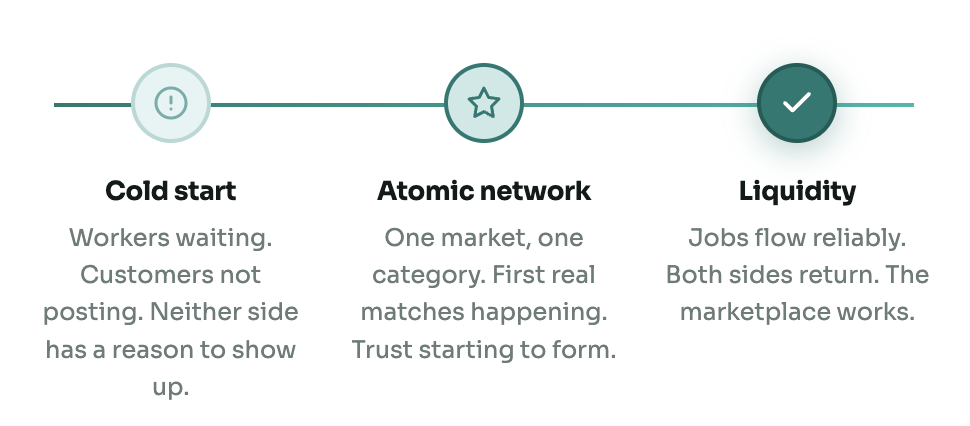
Building a two-sided labour marketplace is hard. Workers won’t show up if there are no jobs, and customers won’t post jobs if there are no reliable workers. This is the chicken-and-egg problem, aka what comes first, demand, or supply?
The usual instinct is to grow your way out of it. Sign up more workers, onboard more customers, expand to more cities. But more users doesn’t automatically mean the marketplace starts working. Getting both sides active at the same time, reliably enough that real matches happen, and people keep coming back, is a different challenge entirely. We call that point liquidity.
This brief draws on direct inputs from four African jobtech founders: Shaaré, Instollar, Mavu, and EqualReach, who shared what worked and what didn’t.
Here’s what’s inside:
- Why growing your user base can make things worse before they get better
- How to tell whether your platform is supply-constrained or demand-constrained — and what to do about it
- When to run things manually, and what tells you it’s time to automate
- Practical tactics for getting the first real matches to happen