CVs have been near-useless for a very long time. A Word document in which you make claims about yourself, plus two friendly referees who never answer their phones. For most workers in Africa, it’s worse still, as most of this work is informal and isn’t deemed suitable for a CV.
When I was COO of the blue-collar matching platform, Lynk, we used to call ourselves the ‘LinkedIn of the LinkedOut’, enabling workers to develop their profiles and show off their work through work completed. It looked like this:
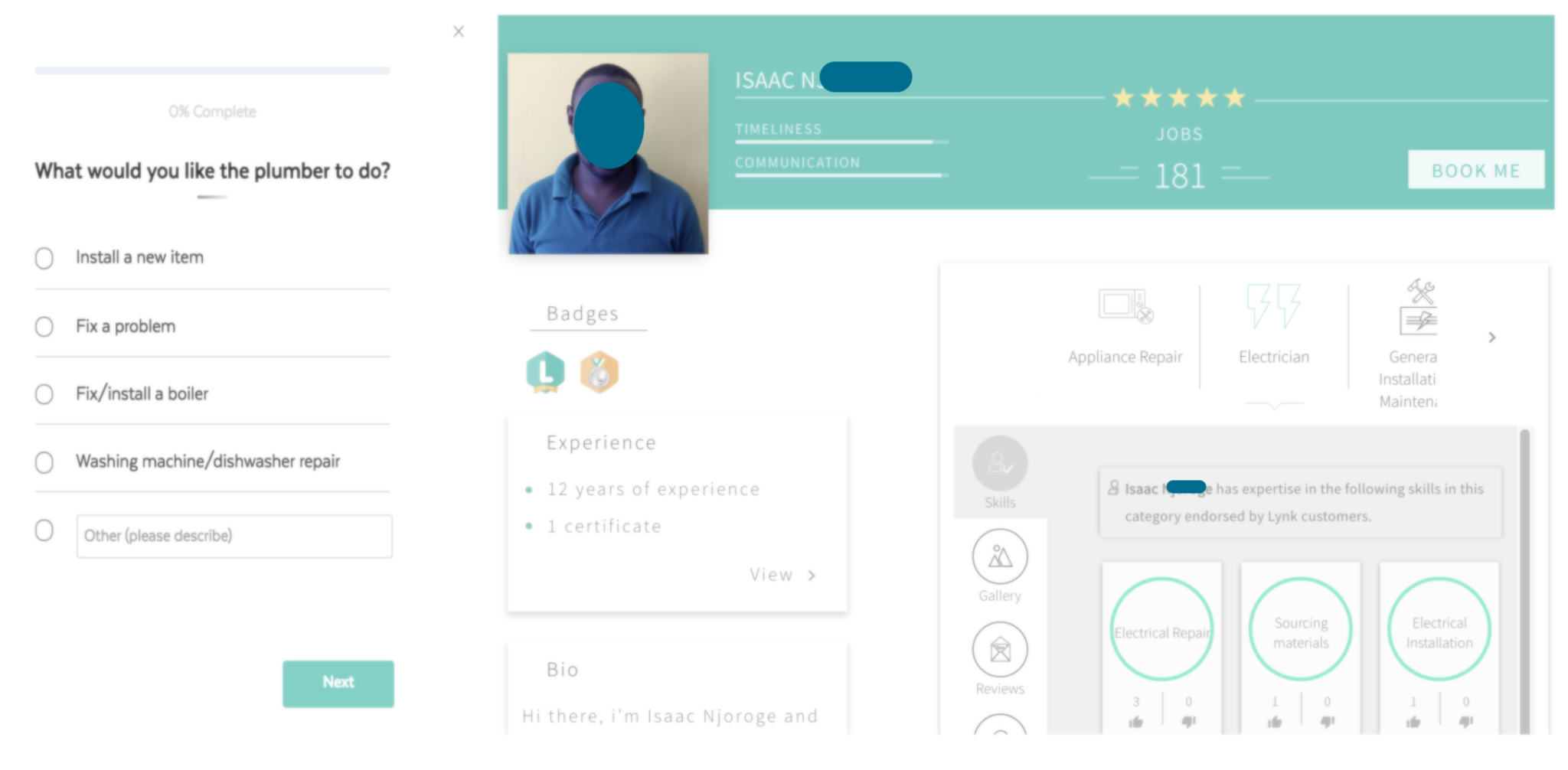
But the question is: what happens if that platform dies? Or pivots? Lynk stopped operating as Lynk in late 2021, and that same plumber who had his first-ever CV thanks to 180+ five-star ratings could no longer use that profile to get more work or to use that data to access financing.
That data existed. It was accurate. It had been verified by 250 different paying customers. And then it was gone.
We made the argument for fixing this back in 2022, inThe Case for Portable Reputation. Four years on, we stopped writing about it and partnered with GigCV – a Dutch non-profit portability service – to workshop it with founders in Africa, integrate the API, and see what actually happens.
The piloting found a few things that we could have guessed – for example, the service really only works when there’s loads of users with loads of gigs on loads of different platforms (which isn’t yet the case at large in Africa) – as well as some things that surprised us: 87% of platform workers in Kenya expect their platform experience would be truly valued elsewhere, even as a PDF printout.
At the moment, we don’t think portable reputation has a scalable model in the African jobtech scene, but it will become more and more important as jobtech platforms become more and more the standard in African labour markets.
Dive into the report to learn more.
Until next time,
Chris

📣 We need you
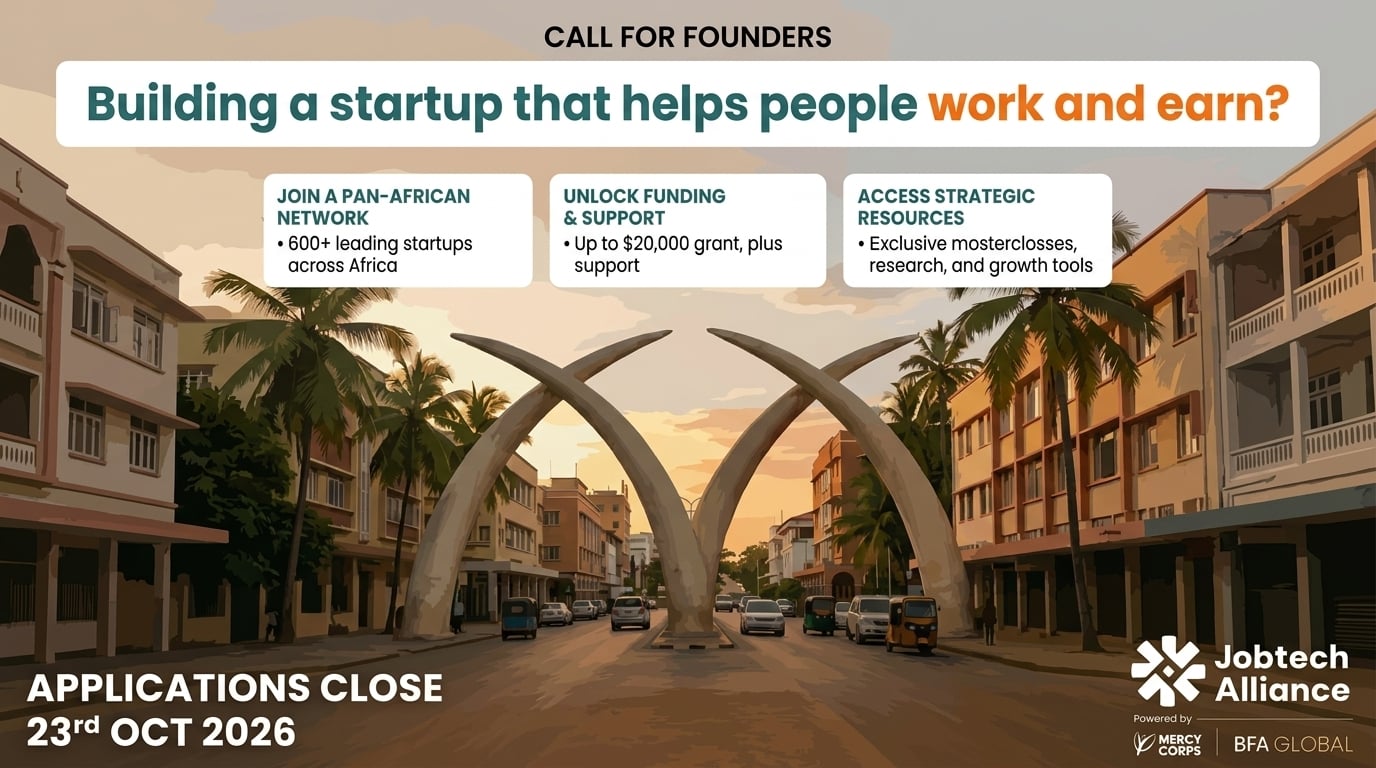
Are you building a jobtech startup in Mombasa?
We want to meet you.
is launching in Mombasa and looking for founders whose platforms help people find work, train for work, or earn a living. That includes platforms connecting people to deliveries, trades or care work; freelancing and remote work tools; and digital services for small businesses.
What you get: a network of 600+ founders across Africa, up to $20,000 in funding and technical support if you meet our investment thesis, masterclasses on pricing, retention and unit economics, and access to our research on digital work here in Africa.
No fee. No equity. No minimum revenue. If it is live and people are using it, apply.
Applications close extended to 23rd October 2026.
👂 Overheard
“A young person spends around $90 a month to look for work. Data, transport, application fees. That is someone with no income paying for the privilege of just being considered.”
– Yatin Nana at the Ten Commandments Webinar earlier this month
The conversation went beyond apps and marketplaces. Ten veterans got into the market failures businesses are trying to solve, where demand comes from, what it takes to create quality work, and what founders should think about before they scale, based on our Ten Commandments of Jobtech.
- Don’t expect seed-funded startups to solve systems-level market failures while simultaneously delivering conventional marketplace unit economics.
- The biggest opportunity may be connecting African talent to global purchasing power.
- If platforms reduce the role of social connections in getting work, they can open access to people excluded by offline labour markets.
- Most people build a portfolio of jobs, so a platform that adds one meaningful income stream is already succeeding.
- “How big is your platform?” is the wrong question. Most are small by design, and going deep in one vertical often beats chasing scale.
🗞️ Who’s making the news
Platforms for offline work
-
Uber wound down its Nigeria and Uganda operations on 2 September, ending twelve years in Nigeria, as part of a global restructuring that cuts 3,300 jobs, roughly 10% of its workforce, with investment redirected towards autonomous vehicles. The platform says the decision is limited to those two markets, and it continues to operate in Egypt, Ghana, Kenya and South Africa, with Bolt, inDrive, LagRide, Faras and SafeBoda positioned to absorb the demand.
Labour Mobility
-
Velocity, one of our portfolio companies, has received the first investment from the Africa Jobs Fund, the $100 million vehicle launched in May by former Wasoko CEO Daniel Yu, which measures itself on generating $500 in additional worker career earnings for every $1 deployed. The Kenyan platform trains nurses to the B2-level German required by German employers and places them in hospitals there, and is now expanding into Malawi and Zambia.
Digital services for micro-enterprises
-
Flowcart, anotherportfolio company, has entered a strategic collaboration with Mastercard to widen the payment options inside its WhatsApp In-Chat Checkout, adding embedded cards, credit and buy-now-pay-later to a layer already handling about $3 million a month across more than 50 gateways. Flowcart is extending the same rails to everyday services such as talktime top-ups and utility bills, keeping discovery, purchase and payment in one conversation.
Design firm wanted
Kenya-based design firms: we’re looking for you.
is seeking a design partner to support our content, research and ecosystem teams across reports, publications, social media, presentations, infographics and more.
We’re looking for a firm with strong editorial design, data visualisation and systems thinking, with experience turning complex ideas into clear, engaging visuals.
Interested? Complete the Intent to Bid Form and submit it to [email protected] by 23 September 2026, quoting tender reference MC-AG/TN 31/2026.
Kenya-based firms only.