What all those jobtech acronyms and phrases mean, from BPO to DPI, and how they will define the future of work in Africa.
When I joined the Jobtech Alliance content team, I thought I had this ‘future of work’ thing figured out (kinda). I’d sat through my fair share of pitches about HRtech, worktech, even edtech spin-offs that promised to ‘revolutionise hiring’.
Then someone in my first meeting casually dropped BPOs, end-to-end verticalised platforms, and ecosystem enablers in one sentence. I nodded like I understood. I didn’t.
So, I did what any curious content person would do: I started a dictionary. Eventually, I realised I wasn’t the only one who could use it, and I needed the experts around me to chip in, so here we are.
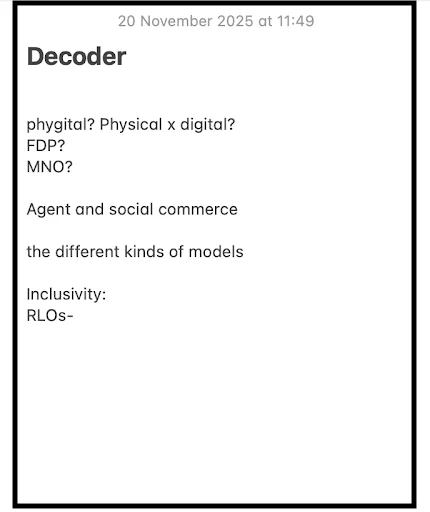
The birthplace of the decoder
So, welcome to the jobtech dictionary, your go-to glossary for making sense of Africa’s growing digital employment ecosystem, by Team Jobtech Alliance.
Contributors: Chris Maclay, Mimi Mundia, Margarita Dimova, and Brenda Nambatya.
How to use it: skim the categories, jump to what you need, or read straight through if you want the full picture of what jobtech actually means in Africa.
How this guide is organised
- The 5 types of jobtech platforms: how we categorise jobtech
- Contested terms: the words people use to mean different things
- Platforms & business models: what jobtech platforms actually do
- Inclusivity & access: who gets in, who gets left out, why it matters
- Worker rights & conditions: the rules of the road for platform work
- Data & measurement: the numbers that show whether jobtech works
Browse all 42 terms, A to Z
- Accessibility
- Active workers
- Aggregator vs marketplace
- Algorithmic management
- BPO and GBS
- Creator platforms
- Data annotation
- Deactivation
- Decent work
- Digital services for microenterprises and solopreneurs
- Digital tools for worker enablement
- Disbursement lag
- E-commerce / ecommerce
- Earners
- Employer of record
- Gender-transformative design
- Gig work
- Inclusive by design / inclusive UX
- Informal economy
- Informal labour digitisation
- Job placements
- Jobtech platform
- Labour market intermediation
- Last-mile agents
- Last-mile reach
- Lead gen marketplace vs full-service marketplace
- Low-tech / no-tech pathways
- Microwork
- Platform worker
- Platforms for digitally delivered work
- Platforms for offline work / location-based platforms
- Portable benefits
- Retention
- Service marketplace
- Skills-based hiring
- Social commerce
- Take rate
- Talent marketplace
- Tech-enabled skilling
- Two-sided marketplace
- Vertical vs horizontal platforms
- Worker voice and collective action
1. The 5 types of jobtech platforms
This section kicks off with what we mean by a jobtech platform, and then lays out the five categories we use to organise the space. This taxonomy is the backbone of how we research, invest, and write about jobtech across the team, and a useful map for anyone new to the sector.
Jobtech platform
A jobtech platform is a digitally-enabled business or service that helps people find work, increase their income, or learn skills to earn more.
Jobtech is broader than ‘job boards’ or ‘gig platforms’. It covers any platform that helps someone earn; from a marketplace matching plumbers with customers, to a tool helping micro-retailers manage supply chains, to a platform helping local creators sell to global markets. The Jobtech Alliance organises jobtech platforms into five categories, defined below: platforms for offline work, platforms for digitally delivered work, digital tools for worker enablement, tech-enabled skilling, and digital services for microenterprises and solopreneurs.
Example: Fuzu (Kenya) is a jobtech platform that helps people find jobs, but so is Twiva (Kenya), a creator-powered social commerce platform that helps MSMEs earn through social media. Both connect people to livelihoods; neither looks much like the other on the face of it, but both, at their core, are platforms that mediate between supply and demand and connect people to income-earning opportunities.
Related reading: What is Jobtech? The full taxonomy
The five types at a glance
 Platforms for offline workWork is coordinated online but done in person: driving, cleaning, repairs, care.Read the definition
 Platforms for digitally delivered workWork is found, done and delivered fully online.Read the definition
 Digital tools for worker enablementTools that give workers access to rights, benefits and protections.Read the definition
 Tech-enabled skillingTechnology that equips people with skills for the world of work.Read the definition
 Digital services for microenterprises and solopreneursTools that help people running small businesses work more efficiently.Read the definition
Platforms for offline work / location-based platforms
Platforms for offline work are jobtech platforms where the work is coordinated online but completed in physical locations.
The World Bank calls these ‘location-based platforms’. The platform handles discovery, booking, payment, ratings, and dispute resolution; the work itself (driving, cleaning, repairs, caregiving, deliveries) happens face-to-face (hence the platform is built for ‘location’). This is the largest category of platform work in Africa by worker volume, and the one where most of the gig-economy policy conversation is centred. Sub-types include job boards and recruitment platforms, logistics and mobility, beauty and wellness, caregiving services, labour mobility, domestic work, and blue-collar skilled trades.
Example: SafeBoda (Uganda) is a platform for offline work. Riders are matched through the app, but the trip happens on the road.
See also: Service marketplace, Gig work, Vertical vs horizontal platforms
Platforms for digitally delivered work
Platforms for digitally delivered work are jobtech platforms where people find, do, and deliver work fully online.
The work never leaves the screen: software development, design, content moderation, data annotation, online tutoring, customer support, creator content. This category includes the most globally connected forms of African jobtech, where workers in Lagos or Nairobi are doing work for clients in London or San Francisco. It’s also where the AI conversation has the most direct stakes, because the work itself is what AI is increasingly capable of doing. Sub-types include skilled online freelancing, managed services (GBS and BPO), microwork, digital creator marketplaces, play-to-earn, and digitally delivered domestic and caregiving services.
Example: Hugo (Nigeria, Senegal, Kenya) is a platform for digitally delivered work, a BPO connecting African talent to global clients across customer support, sales, and AI services, where the work is done remotely by workers at home.
Related research: Africa’s Digital Work Sector: At a Crossroads in the Age of Generative AI
See also: BPO and GBS, Microwork, Data annotation, Creator platforms
Digital tools for worker enablement
Digital tools for worker enablement are platforms that give workers access to rights, benefits, and protections; separate from the platforms they earn through.
A jobtech platform helps a worker find income. A worker-enablement tool helps that same worker access social protection, build a portable reputation, get earned wage access, or organise with other workers. These tools exist because of both unique challenges in the platform economy (most platform workers don’t get traditional employer benefits, for example), and unique opportunities (platforms offer a rare opportunity for visibility and data trail into the ‘informal economy’). Some of these platforms can look a bit like ‘fintechs’, but what is unique about these platforms is that they are made possible because they live on top of the data produced by other platforms. Some of these platforms can include sub-types such as worker rights and benefits platforms, identity and reputation management, financial access, and alternative data platforms.
Example: Power (Kenya) is a digital tool for worker enablement, offering earned wage access, loans, and insurance to gig and salaried workers.
See also: Portable benefits, Worker voice and collective action
Tech-enabled skilling
Tech-enabled skilling platforms use technology to equip people with skills for the world of work.
Different from generic ‘edtech’ in Africa, which tends to focus on primary or secondary education, tech-enabled skilling is explicitly oriented toward employability, with content built around real job demand, partnerships with employers, and pathways into work. Learning can be delivered as standalone e-learning courses, on WhatsApp/SMS, or integrated into user flows of other apps. The strongest models track learners into jobs and earnings, not just course completion. Sub-types include guided or cohort-based digital training, self-paced skill development, labour market digital apprenticeship and mentorship platforms, and credentialing and assessment. Many job and gig platforms are increasingly utilising AI to integrate skilling into the platforms themselves.
Example: Learn.ink (Africa-wide) is a tech-enabled skilling platform: mobile microlearning that organisations like One Acre Fund and M-KOPA use to train their frontline workers.
See also: Skills-based hiring
Digital services for microenterprises and solopreneurs
Digital services for microenterprises and solopreneurs are platforms that help people running small businesses get more work done, more efficiently.
Different from fintech or enterprise software, these tools are built around the realities of someone running a small or one-person business, a market stall, a small shop, or a home-based operation. They’re a jobtech category because for most of Africa, microenterprise is the job. Sub-types include e-commerce marketplaces, revenue and growth tools, distributed manufacturing, creators as businesses, social commerce, digitally-enabled agent models, and end-to-end verticalised platforms.
Example: Bumpa (Nigeria) is a digital service for microenterprises, helping small business owners across Africa run digital storefronts and manage operations.
Related research: Digitising Microenterprises: How Jobtech Platforms Can Plug Workflow Gaps and Value Leaks
See also: Social commerce, Creator platforms, Last-mile agents
2. Contested terms
Some words in this space don’t have a single definition; they have several, and the choice between them matters. This section names the terms where the language itself is up for grabs.
Gig work
Gig work is sometimes defined narrowly as on-demand, app-mediated, per-task work; sometimes broadly as any flexible, non-standard work. The narrow definition centres ride-hailing, delivery, and microwork. The broad definition includes freelance creative work, consulting, even informal trade. The choice shapes statistics dramatically; a country might have 200,000 gig workers or 5 million, depending on which definition is used. The Jobtech Alliance generally uses the narrower platform-mediated definition.
Platform worker
Platform worker can mean someone (a user) who occasionally earns through a platform, someone whose primary income comes from one or more platforms, or anyone signed up on a platform, regardless of activity. These three definitions describe very different populations. The third is what platforms tend to report. The second is what most policy frameworks should care about. The first is closer to the on-the-ground reality, where platform work fits alongside other income strategies.
Example: GoodayOn (Ethiopia) operates as a digital marketplace for blue-collar and pink-collar gig work.
Informal economy
The informal economy is most often defined as economic activity not covered by formal regulation, taxation, or social protection, but the boundary is fuzzy. Is a registered platform worker on a registered platform formal or informal? Is a WhatsApp seller informal if their payments flow through a registered fintech? In African contexts, the formal-informal binary breaks down quickly. The Jobtech Alliance’s framing is that most platform work is informal-with-digital-rails, a hybrid category that needs its own policy frameworks rather than being shoehorned into either side of the existing line.
Related research: Microenterprises Sector Scan
Decent work
Decent work’s ILO definition is widely accepted in principle and widely contested in practice. What’s the right minimum for ‘fair pay’ in a platform context? How much social protection counts as enough? Is voluntary flexibility worth less protection? These questions don’t have a single answer, and the policy disagreements they generate are some of the most consequential in the sector. The Jobtech Alliance has worked with the ILO and others to develop a Quality of Work Measurement Tool for the platform economy.
3. Platforms & business models
The backbone of the jobtech ecosystem: what platforms do, how they operate, and why they matter.
Two-sided marketplace
A two-sided marketplace is a platform that connects two distinct user groups who need each other, typically workers and employers, or buyers and sellers. The challenge is balancing both sides at once. Too many workers and not enough jobs, the workers leave. Too many jobs and not enough workers, the employers leave. Most platforms fail because they can’t solve this chicken-and-egg problem.
Example: Jobjack (South Africa) automates entry-level recruitment, balancing both job seekers and employers in one marketplace.
Service marketplace
A service marketplace is a digital platform that matches customers with workers who provide services, online or offline. The defining feature is that the product being transacted is human work, not goods. Services span the full range: a household booking a cleaner, a startup hiring a freelance designer, a small business commissioning a logo, a parent finding a tutor. This is what distinguishes a service marketplace from a two-sided marketplace more broadly. A two-sided marketplace might match buyers and sellers of physical goods (Jumia, Kyosk), while a service marketplace is specifically transacting work.
Example: Jipamba (Kenya) matches personal care providers and beauticians to gigs in a service marketplace model. Online service marketplaces (freelance design, copywriting, development) follow the same model. The work is delivered remotely instead of in person.
Microwork
Microwork is digital work broken into very small, often minute tasks: image labelling, content moderation, transcription, and surveys. Different from gig work, which usually involves discrete ‘jobs’ of an hour or more, microwork could involve individual tasks paying just a few cents per ‘task’. Microwork is the engine room of the AI economy: the human work that makes machine learning systems function. African workers form a major share of the global microwork supply, and the conversation about pay, working conditions, and AI displacement runs straight through this category. It is worth noting, as we’ve written, that microwork in its original form is increasingly scarce, as AI labelling becomes more and more specialised and is likely to involve full-time or larger contract work.
Example: Amazon Mechanical Turk and Scale AI are the global reference points for microwork; task-based platforms where workers complete small AI training and data tasks, often paid per piece.
Related research: Digital Work Sector Scan
Data annotation
Data annotation is the work of labelling raw data (images, audio, text, video) so that AI systems can learn from it. One of the largest categories of digital work in Africa right now, and the work that quietly makes most AI systems possible. The shape of the work varies enormously. At one end, full-time employment with training, benefits, and career progression. At the other, task-based microwork paid per piece, with no guarantees. Most annotation work in practice sits somewhere between these two: combinations of fixed contracts and variable workloads, in-house teams and crowd-sourced supplements, full-time roles and on-demand pools.
As AI capabilities grow, simpler annotation tasks are being automated, while complex tasks, such as reasoning evaluation, expert review, multilingual nuance, are paying more.
Example: CloudFactory (Kenya, Uganda) is a managed-service model; workers are employed full-time and trained for AI data work. Sama and Karya operate similar models with a stronger ethical-AI positioning. At the other end, microwork platforms deliver annotation tasks at piece rate.
Social commerce
Social commerce is income-generating activity that builds on an individual’s capacity to sell directly through their social networks, either through social media platforms or through trusted in-person networks: WhatsApp shops, Instagram thrift sellers, Facebook Marketplace traders, TikTok storefronts. It thrives in Africa because the barriers are extremely low, and because of a high-trust society where people are more likely to buy from someone they trust. No storefront, no formal onboarding, no capital or inventory required. The trade-off is that workers operate outside any platform protections, with no ratings system, no dispute resolution, and no income guarantees.
Example: Tendo (Ghana) is a reseller platform accessible by app, SMS, or website that enables users to sell products on their social media; Kamel (Nigeria) helps individuals run social commerce businesses without inventory.
Creator platforms
Creator platforms let people earn from content, community, skills, or digital products. African creators monetise through platform payouts, brand partnerships, affiliate income, or selling digital goods through mobile-money-linked tools. For many young Africans, creator platforms are a legitimate career pathway; not a side hustle, but the main thing.
Example: Selar (Nigeria) supports over 150,000 creators selling digital products; Beemi (Ethiopia) lets influencers host interactive games on TikTok, YouTube, and other platforms.
Related research: Digital Creative Industry Sector Scan
Informal labour digitisation
Informal labour digitisation is the process of moving offline, reputation-based work onto digital rails. The shift increases worker visibility, improves protections, and reduces the cost of finding customers. It also raises new questions: who owns the digital reputation? How does formalisation interact with tax, regulation, and existing social structures?
Example: Fixa (Rwanda) connects informal workers with job opportunities and gives them verifiable career identities; FUNDIS (Kenya) is digitising informal blue-collar trades.
Labour market intermediation
Labour market intermediation is the broad term for any process that matches workers to work: platforms, agents, job boards, hybrid models, or traditional recruitment. The term is useful because it lets you compare digital and analogue intermediation on the same terms. Sometimes the agent at the bus stop matches workers to jobs more effectively than the app.
Talent marketplace
A talent marketplace is a platform that matches professional, often digital or remote, talent with employers; typically with skills verification, portfolio vetting, and quality assurance built in. Distinct from job boards (which just aggregate listings) and gig platforms (which mostly handle short tasks), talent marketplaces typically facilitate the match between the two by offering services to employers and/or job seekers.
Example: Tunga (Netherlands/East Africa) connects African developers to international tech teams; Gebeya (Ethiopia) runs a SaaS-enabled talent marketplace; Meaningful Gigs places African creative talent with enterprises like Google and Snapchat.
BPO and GBS (business process outsourcing and global business services)
BPO and GBS are firms that deliver process-driven work (customer support, data annotation, content moderation, trust and safety operations, sales, and back-office services) for global or local clients on contract.
Often used interchangeably, BPO typically involves the outsourcing of tasks; GBS is more likely to involve greater integration into day-to-day business operations. The bigger story is that BPO and GBS firms play an important role in African jobtech, offering work to digital workers and acting as both employers and skills pipelines for the wider tech economy. They are also undergoing the biggest disruption in jobtech right now. AI is automating the simpler tasks, pushing firms to move up the value chain or shrink.
Example: Tana (Kenya) is a tech-enabled marketplace connecting global companies to vetted and trained remote teams across customer support, sales, and AI services. iTalanta (by Elewa, Kenya) is an example of a Kenyan IT GBS firm and talent accelerator bridging the local talent pool with global service demand.
Related reading: Africa’s Digital Work Sector: At a Crossroads in the Age of Generative AI
Last-mile agents
Last-mile agents are human intermediaries (sometimes digitally enabled) who help platforms reach customers or workers in places where digital adoption is low. They handle trust, onboarding, and digital literacy gaps. In many African contexts, the last-mile agent is the difference between a platform existing on paper and a platform actually working.
Example: Jumia’s JForce agents act as last-mile sellers for the Pan-African e-commerce platform, running micro-businesses in their communities.
E-commerce / ecommerce
An e-commerce platform is an umbrella term for a digital platform where goods are bought and sold online. E-commerce becomes jobtech when the platform creates earning opportunities for its users: merchants selling through marketplaces, agents earning commissions for facilitating sales in their communities, delivery and fulfilment workforces.
Example: Jumia (Pan-African) runs an e-commerce marketplace alongside JForce, its sales agent programme, turning individuals into earners who facilitate sales in their communities while the platform handles fulfilment.
Aggregator vs marketplace
An aggregator pulls together listings from multiple sources and presents them in one place; a marketplace facilitates the actual transaction between two parties. The line between the two gets blurry. A job board is an aggregator. A platform that handles the application, payment, and review is a marketplace. The distinction matters for things like worker protections (marketplaces have more responsibility), monetisation (marketplaces take a transaction cut, aggregators sell ads or listings), and trust infrastructure (marketplaces need it; aggregators less so).
| Compared on | Aggregator | Marketplace |
|---|---|---|
| What it does | Pulls together listings from many sources and shows them in one place | Facilitates the actual transaction between two parties |
| How it earns | Sells ads or listings | Takes a cut of each transaction |
| Trust infrastructure | Needs less of it | Needs it |
| Responsibility to workers | Less | More |
Example: Brighter Monday is largely an aggregator across East Africa; TERAWORK (Nigeria) is a marketplace handling end-to-end freelance transactions.
Lead gen marketplace vs full-service marketplace
A lead gen marketplace connects customers to providers and steps back, letting the two parties negotiate pricing and terms themselves. A full-service marketplace stays in the middle of the transaction, like setting prices, vetting workers, handling payments, and managing the customer journey end to end.
The distinction matters because it shapes everything: worker earnings, customer trust, match rates, and the platform’s own unit economics. Lead gen models are simpler to operate and scale faster, but in African contexts, they often struggle with low match rates, inconsistent quality, and high churn on both sides. Globally, Thumbtack and Kandua are recognisable lead gen models; Urban Company and SweepSouth are full-service. Several African platforms have made the switch from lead gen to full-service after running into the limits of the lighter model.
| Compared on | Lead gen | Full-service |
|---|---|---|
| What it does | Connects customers to providers, then steps back | Stays in the middle of the transaction from start to finish |
| Pricing and terms | The two parties negotiate | The platform sets prices |
| After the match | The parties manage the job themselves | The platform vets workers, handles payments and manages the customer journey |
| Strengths and limits | Simpler to operate and scales faster, but here in Africa often struggles with low match rates, uneven quality and high churn | More to run, but GoodayOn saw average worker earnings triple in a year after switching |
| Known examples | Thumbtack, Kandua | Urban Company, SweepSouth |
Example: GoodayOn (Ethiopia) launched as a lead gen platform for blue-collar gig work and then pivoted to a full-service model (Etalem), standardising services, vetting workers, and setting prices. In one year, average worker earnings tripled, and retention for both workers and customers hit 90%.
Related reading: Lead Gen or Full Service? Lessons on Blue Collar Gig Matching from GoodayOn
Vertical vs horizontal platforms
A vertical platform specialises in one sector (logistics, domestic work, software development); a horizontal platform serves many sectors at once. Vertical platforms can build deeper trust, better matching, and sector-specific worker protections. Horizontal platforms scale faster and serve more workers, but often offer less trust and matching. Both models work; the choice depends on the worker problem the platform is trying to solve.
| Compared on | Vertical | Horizontal |
|---|---|---|
| Focus | One sector, such as logistics, domestic work or software development | Many sectors at once |
| Strengths | Deeper trust, better matching and sector-specific worker protections | Scales faster and serves more workers |
| Trade-off | Serves one sector only | Often offers less trust and weaker matching |
Example: Shaaré (Nigeria) is vertical; focused specifically on cleaning services. Mon Artisan (Burkina Faso) is horizontal; a skill-on-demand platform serving a range of informal trades.
Employer of record (EOR)
An EOR is a third party that legally employs workers on behalf of another company (handling payroll, benefits, taxes, and compliance) while the workers do the work for the contracting company. EORs let companies hire workers in countries where they don’t have a legal entity. For African talent, EORs are increasingly the mechanism by which global remote work happens. A Nairobi developer working full-time for a Berlin company is often legally employed by a Nairobi-based EOR.
Example: Breedj (Mauritius) is a recruitment platform with embedded EOR services, helping organisations hire and legally employ African talent across the continent without setting up local entities.
4. Inclusivity & access
Inclusion isn’t a footnote in jobtech; it’s the whole point. These terms shape who actually benefits from digital work in Africa.
Inclusive by design / inclusive UX
Inclusive design is the practice of building platforms around the realities of the workers who will actually use them: low data budgets, shared devices, erratic networks, irregular incomes, varied literacy levels. It’s baked into flows, language, trust, and accessibility from day one. Bolted on at the end, it doesn’t work.
Example: Arifu (Kenya) is built around accessible content and chat-based delivery so that low-income workers can learn and skill up on basic phones.
Accessibility
Accessibility is the practice of designing platforms so that the widest possible range of users can actually use them, across language, literacy, device, connectivity, documentation, ability, and circumstance. In jobtech contexts, accessibility goes well beyond the technical definition (screen readers, alt text, audio alternatives) that the term carries in mainstream tech. It also covers the realities that determine whether a worker can use a platform in the first place: data costs, device limitations, language coverage, literacy levels, the kinds of identity documents accepted, the cultural fit of the user experience.
Example: Arifu (Kenya) is built around accessibility in this wider sense; low-data, chat-based, designed for users on basic phones and with varied literacy levels.
Low-tech / no-tech pathways
Low-tech and no-tech pathways are platform features that work over USSD, WhatsApp, IVR, or human agent networks rather than requiring a smartphone and stable data. They dramatically expand reach for workers otherwise excluded from digital ecosystems. As smartphone penetration grows, these pathways are sometimes treated as legacy infrastructure, a mistake, given how many users still depend on them.
Example: Afriwork (Ethiopia) reaches over 200,000 users primarily through Telegram; meeting workers in the messaging interface they already use, rather than requiring a separate app.
Gender-transformative design
Gender-transformative design is platform and ecosystem design that addresses the structural barriers women face in digital work, not just accommodating those barriers, but actively reshaping the conditions that produce them. Accommodation looks like: a women-only ride option, a flexible scheduling feature. Transformation looks like: redesigning rating systems that penalise women for declining unsafe rides, building pricing structures that don’t assume unpaid care work doesn’t exist, partnering with women’s networks for trusted onboarding. The first is useful; the second is the work.
Example: Heels & Green (Kenya) and Women In Technology Uganda are platforms explicitly designed around the realities of women in digital and technical work.
Key resource: Inclusivity framework
Last-mile reach
Last-mile reach is what it takes to ensure platforms actually serve people who live far from cities, lack reliable digital access, or face infrastructure constraints. Inclusion is meaningless if only urban, smartphone-owning users benefit. Last-mile reach typically requires hybrid models (agents, USSD, partner networks) and explicit investment, because the unit economics rarely justify it on a pure platform model. The platforms that succeed at last-mile reach are often phygital by design: combining digital tools (apps, payments, matching) with physical infrastructure (agent networks, training centres, distribution hubs) to meet users where they actually are.
Example: Mwingi (Kenya) is built around last-mile reach as its core proposition, supplying essential goods to remote, rural areas through a tech-enabled distribution model.
5. Worker rights & conditions
The rules of the road for platform work: what good looks like, what bad looks like, and the language for the gap in between.
Algorithmic management
Algorithmic management is the practice of using software (not human supervisors) to direct, evaluate, and discipline workers. Trip assignment, surge pricing, deactivation decisions, performance monitoring: the manager is code. This raises hard questions about transparency (workers often don’t know why a decision was made), accountability (who is responsible when the algorithm gets it wrong?), and worker voice (how do you negotiate with a system?). It’s one of the most active areas in platform-work policy globally.
Example: Ride-hail drivers across major African cities work under algorithmic management for routing, pricing, and ratings.
Deactivation
Deactivation is the platform-economy equivalent of being fired; a worker’s account is suspended or terminated, ending their access to income. It can happen for safety violations, low ratings, fraud detection, or sometimes for reasons the worker never learns. The lack of due process around deactivation (no clear appeals system, no advance warning, no human conversation) is one of the central worker-rights debates in platform work.
Example: Driver associations across multiple African cities have organised around clearer deactivation protocols.
Portable benefits
Portable benefits are protections (health insurance, retirement contributions, paid sick days) that travel with a worker across multiple jobs and platforms rather than being tied to a single employer. The concept is increasingly important as gig work scales. Most existing benefits systems assume a single, full-time employer-employee relationship. Most platform workers don’t have that. Portable benefits are how the social contract gets updated for the new shape of work.
Example: Earna (Nigeria) offers automated retirement, insurance, and credit for global freelance and gig workers, a portable benefits model in practice.
Skills-based hiring
Skills-based hiring is the practice of hiring people based on demonstrated skills rather than credentials, prior job titles, or educational pedigree. It’s a meaningful shift in how employers think about talent, and it disproportionately benefits workers who don’t have access to traditional credentialing pathways. For African talent in particular, skills-based hiring opens doors that degree requirements close.
Example: Skilladder (Nigeria) and Yenza (South Africa) are skills-assessment platforms designed to match workers to roles based on demonstrated capability rather than credentials.
Worker voice and collective action
Worker voice and collective action refer to the ways platform workers organise to influence pay, conditions, and platform decisions, through associations, unions, online communities, or formal collective bargaining structures. Platform work was originally pitched as too fragmented to organise. That has turned out to be wrong. Driver associations, courier unions, and online worker communities are now active forces in most major African platform markets.
Example: iWorkers Kenya brings together digital workers as a community to share experiences, raise issues, and connect across platforms.
6. Data & measurement
The numbers that show whether jobtech is actually delivering value, and the numbers that hide whether it isn’t.
Job placements
A job placement is recorded when a worker secures work through a platform. What counts as ‘securing work’ varies enormously. A completed gig? A month of stable earnings? A full-time job offer? The definition shapes every comparison between platforms, and is one of the reasons headline placement numbers are hard to take at face value.
Active workers
An active worker is a platform user who is logged in and engaging with the platform; browsing, applying, messaging, learning, within a defined period. Active workers and earners aren’t the same thing. Engagement matters for some platforms (learning, networking, discovery), but on its own it doesn’t tell you whether anyone is making money. Reading active workers alongside earners gives the fuller picture.
Earners
An earner is someone who has actually completed earning activity on a platform, not just signed up. Earners metrics cut through vanity. A platform might boast 200,000 signups but only 12,000 have ever earned a penny. The signup number gets the press release; the earners number is the business.
Take rate
Take rate is the percentage of a worker’s earnings retained by the platform. Transparency around take rate is one of the clearest indicators of platform fairness. Hidden, variable, or rising take rates are a major source of distrust and worker churn. Some platforms publish their take rate upfront as a competitive position.
Retention
Retention is the rate at which platform workers (users) continue earning through a platform over time. High retention usually signals good worker experience and predictable income. Low retention can mean many things: platform problems, market saturation, or workers using the platform exactly as intended (a short-term income source while they look for something else).
Disbursement lag
Disbursement lag is the time between work being completed and the worker receiving payment. In many African markets, shorter lag equals better worker outcomes. Workers without savings buffers cannot absorb long delays. They end up in informal credit or skipping meals. Daily payouts are a meaningful product feature, not a nice-to-have.
So, what did we miss?
This dictionary is a living document. The jobtech world keeps evolving fast, and so does the language. New platforms, new business models, new policy debates, new acronyms appearing in meeting notes, the language never sits still.
If there’s a term you think deserves a spot here, or one we should explain better, let us know. The more people understand the language of jobtech, the more people can shape what work actually looks like in Africa over the next decade.