TLDR: We invested in Fuzu in early 2026 because we believe the future of African digital work will be shaped by platforms that own the infrastructure layer enabling global talent, not just the marketplace interface.
Most talent platforms across Africa are still fundamentally operating as marketplaces, trying to win on volume, matching and cheaper sourcing. Fuzu has already been through that phase and has pivoted. Over more than a decade, they built a pretty serious talent infrastructure layer across Africa: systems for sourcing, testing skills, managing workflows, and understanding what good remote talent actually looks like at scale. Millions of profiles have flowed through the platform over the years.
Now Fuzu Atlas is using that infrastructure to run managed global teams.
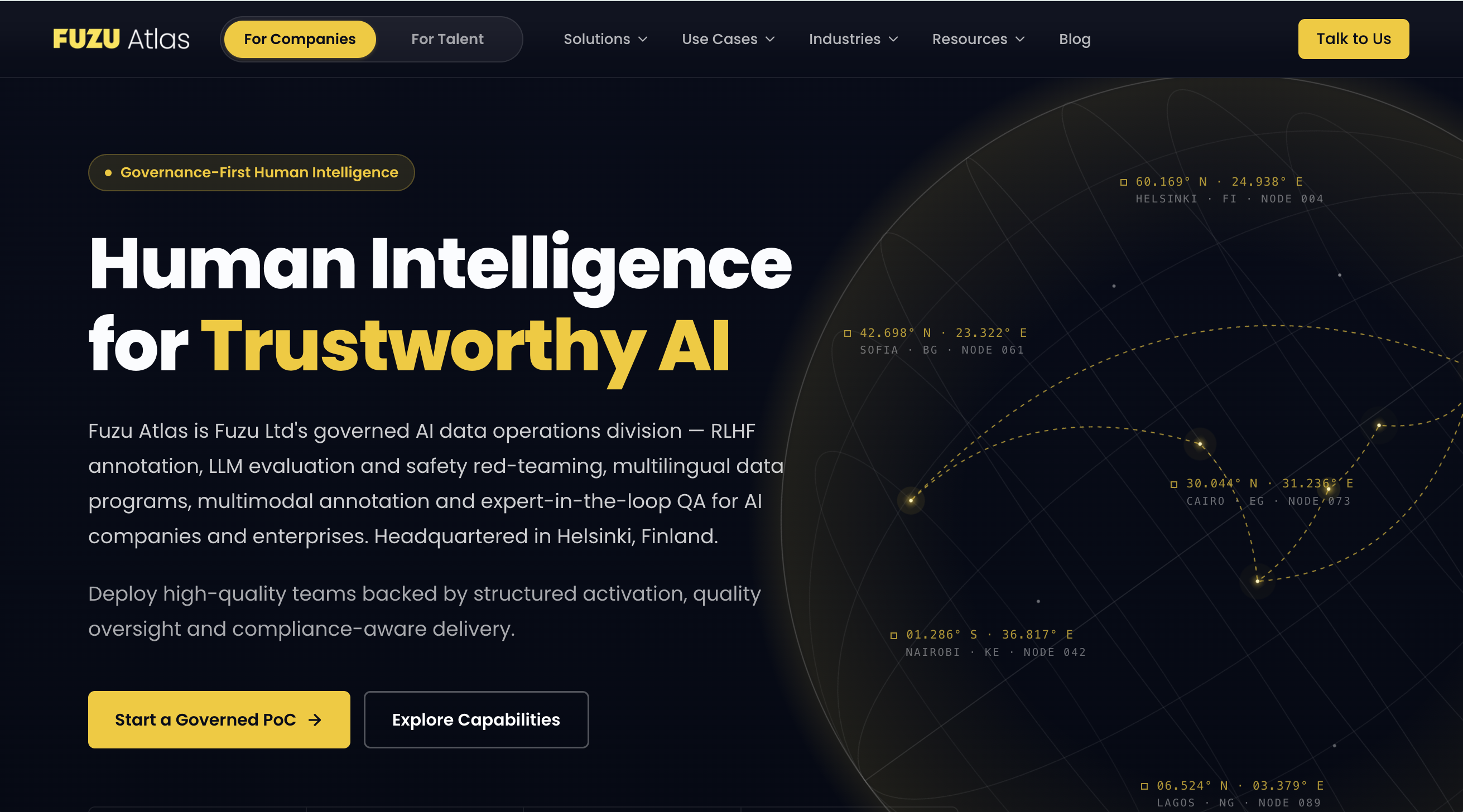
This includes multilingual AI data operations, evaluation and QA work around AI systems, language-related tasks, and other forms of human-in-the-loop support for international clients.
What next for digital work
We first started digging deeper into companies like Fuzu as part of our Digital Work Sector Scan, which looked at how AI is changing the shape of African digital work and what kinds of platforms might still create genuinely good jobs amid that shift. One of our big questions was around the types of digital work that could actually grow. A lot of the lower-paid digital work that helped transition youth, often women, into the sector is exactly the kind of work AI is squeezing the hardest.
That is why Fuzu decided to move away from relying purely on the traditional marketplace logic that still defines a lot of the sector. The old model was becoming harder to scale sustainably: despite Fuzu’s positioning as the leading innovator in the space, competition was increasing, margins were tightening, and more global clients were looking for managed teams rather than simply access to talent pools. So the Fuzu team turned the engine they had built for local employers toward global clients as well, setting the platform up to act as a highly scalable talent sourcing engine that serves both contexts.
This does not give us the whole answer to where digital work goes next, but is one of the more credible directions:
Relationships, repeat work and trust
The Fuzu Atlas team is very intentional about not becoming just another commodity outsourcing vendor competing on lowest cost to help the global AI giants build and refine their models. At its core, Fuzu Atlas is the managed-teams layer built on top of Fuzu’s talent infrastructure: structured teams handling AI data operations, evaluation, and quality work for international clients, with real oversight and accountability rather than anonymous task-based work. The focus is much more on building trust with clients, earning repeat work, and becoming properly embedded in how those clients operate and build winning AI solutions. That is not only commercially sound, it also underpins the provision of quality jobs for the people doing the work.
If Fuzu can keep moving in this direction, there is a real opportunity to create thousands of better digital jobs from Africa into the global AI economy, including for women, who have too often been clustered in the most fragile parts of the digital work market.
Part of our work with Fuzu over the next 6 months will focus on helping sharpen that transition further by supporting more direct international client growth, refining the positioning around Fuzu Atlas, and helping the company continue moving up the value chain into higher-quality AI-adjacent work.