TL;DR: Our latest study surfaces key gendered realities in jobtech, including the finding that women earn 29% more than men on platforms. They’re leaning into digital work because it offers flexibility, safety and access the offline market rarely provides. The report explores why this matters for platforms across Africa.
We’ve sat with women working through jobtech platforms, and you’ll hear a mix of ambition, relief, and realism. Many describe platform work as the first time they’ve had real control over how, and when, they earn. One woman in Ethiopia put it told our team:
“For me, a good job must have a flexible schedule… I have to take care of my children, I need to be able to choose when I work.”
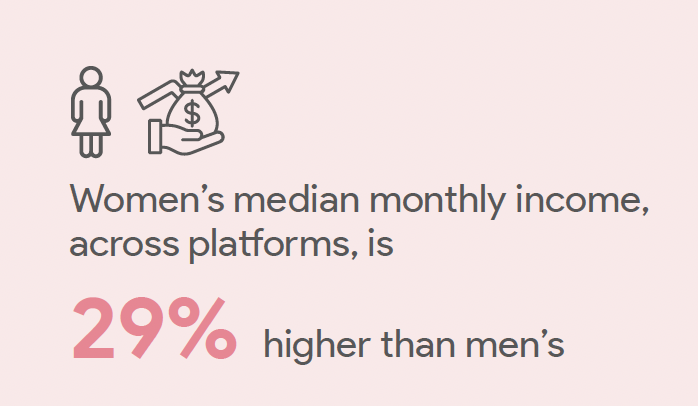
This lived experience is echoed throughout our new gender research, built from 135,000+ users across nearly 50 platforms, combined with in-depth interviews in Kenya, Uganda and Ethiopia. The headline finding is simple but meaningful: women’s median monthly income is 29% higher than men’s.
And unlike in the analogue labour market (where women earn 40–46% less), here the digital shift is bending the curve in their favour.
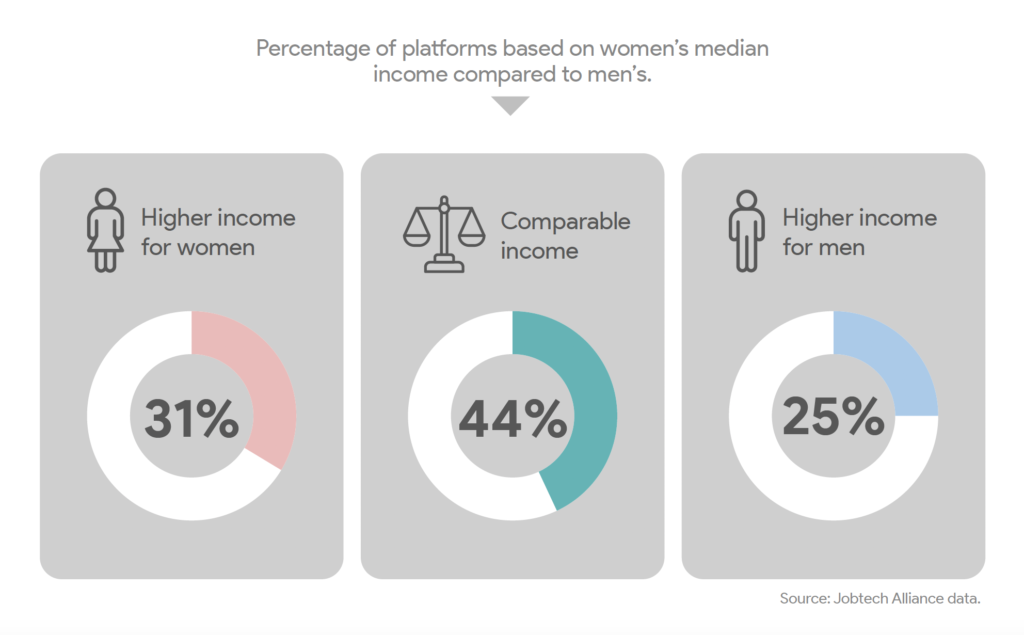
Why women are earning more (and why it matters)
The higher earnings aren’t because women stay longer (retention is nearly the same for men and women at 52% vs 50%). It comes down to something more fundamental: women often have fewer alternatives offline, so when they find a platform that works, they put real effort into it.
But the story is more nuanced than a single stat. Across platforms, 70% of all users are micro-earners making less than $20/month, women included. The difference is, women tend to stay and stretch every opportunity because, as one domestic worker in Ethiopia shared:
“On a good month, I can make ETB 8,000… on a slower month maybe ETB 5,000… It helps a lot, but on its own, it is sometimes not enough.”
What women say they’re looking for
When women describe why they joined platforms, income is always part of the story, but it’s never the whole story. They talk about:
- needing work that fits around childcare and domestic responsibilities
- wanting safer alternatives to informal offline jobs
- unlocking opportunities that would otherwise be closed off to them
- starting without the upfront capital demanded in many sectors
- the dignity and independence that come with controlling their own earnings
As one woman from a ride-hailing platform in Kampala said:
“Right now, I feel it is good because I’m self-employed… you decide things on your own.”
But flexibility can be fragile. Many women explained that while they appreciate setting their own hours, inconsistent demand or penalties for logging off make it hard to rely on the work steadily.
Where women thrive, and why
Women outperform men in sectors where they’ve historically been strong (beauty, wellness, digital creation) but also in digitally structured roles like microwork, play-to-earn, and managed services/BPO. When physical barriers fall away and matching is fair, women’s performance accelerates.
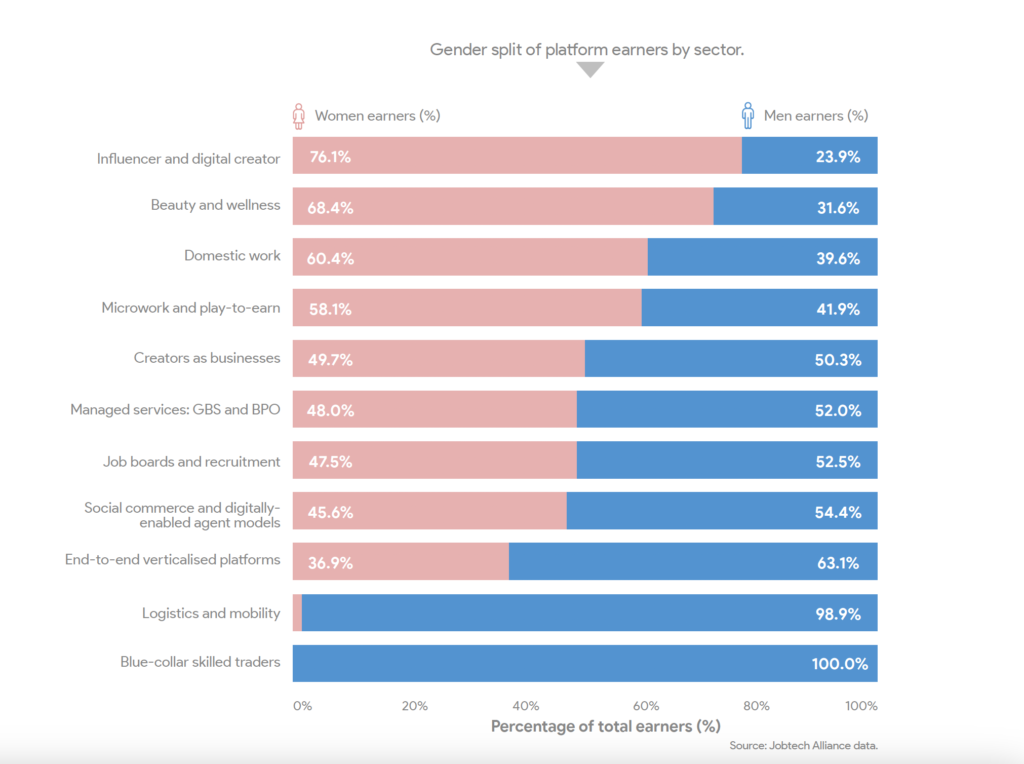
This is about design. When negotiation friction is removed, when safety is taken seriously, when onboarding doesn’t assume access to capital, women rise.
Founders often tell us informally what the data now confirms: when platforms work well for women, they work better overall.
So, what should platforms take from this?
You don’t need a grand gender strategy to make progress; you need practical, human-centred decisions:
- Make earning predictable where possible
- Remove negotiation friction
- Avoid penalising fragmented availability
- Build safety into the workflow, not as an add-on
- Recognise that caregiving shapes work patterns daily
Our 7-Point Inclusivity Framework summarises these ideas, but treat it as a guide, not homework. The real takeaway is much simpler:
When platforms design with women’s realities in mind, commercial performance improves.
More on this to come.
For now, check out the full 2025 gender study and let us know what you think.