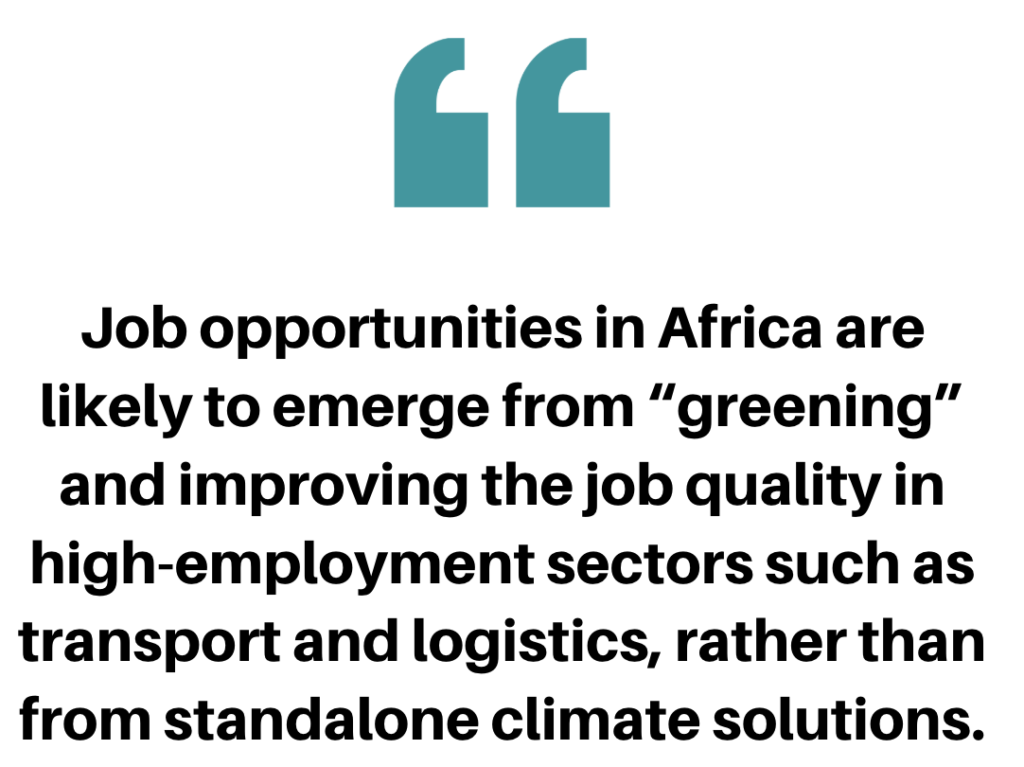
TL;DR Job opportunities in Africa are likely to emerge from “greening” high-employment sectors such as transport and logistics, rather than from standalone climate solutions.By combining electric motorbike lease-to-own model with access to work, and layering in AI-enabled, real-time support for drivers, GreenWheels reduced operational costs, improved earnings stability, and strengthened overall driver experience.
Urban transport demand in Africa and the global shift toward cleaner mobility are converging. Across the continent, electric mobility—including vehicles and supporting infrastructure—is projected to create 100,000 new jobs by 2030, driven primarily by two- and three-wheel electric vehicles, rather than cars. Demand for electric vehicles is accelerating as fuel costs rise and cities grapple with air pollution. Yet, limited access to vehicles and financing, and a scarcity of skilled workers create a unique opening for platforms looking to scale rapidly.
Why GreenWheels
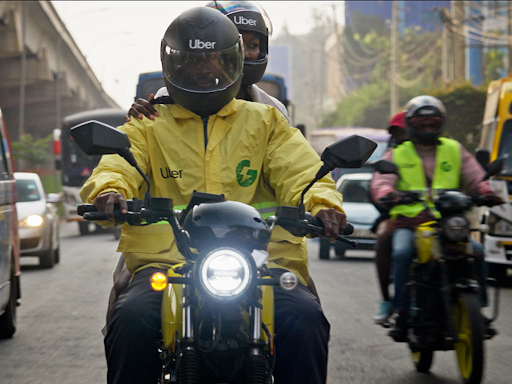
This is exactly the opportunity GreenWheels is after. The platform creates economic empowerment opportunities for drivers through an innovative lease-to-own model, enabling them to earn within the GreenWheels ecosystem—primarily via partnerships with ride-hailing platforms—and ultimately own their motorbikes. GreenWheels has already deployed electric motorbikes to more than 2,000 drivers across Nairobi and Kampala, with plans to expand into additional cities and scale the fleet to 5,000 drivers by 2026.
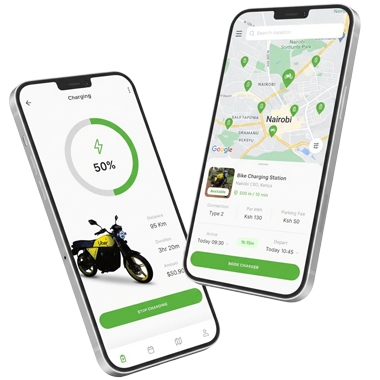
But GreenWheels is more than an EV provider. It is a jobtech platform using green infrastructure as a lever to improve livelihoods, exemplifying the kind of model we put forward in our Green Jobs sector scan:
We initially worked with GreenWheels to develop a WhatsApp-based AI assistant that would strengthen and streamline onboarding and learning. But soon, we realised that driver learning and ongoing engagement through effective support from the platform are closely linked.
The greatest immediate value—for both drivers and GreenWheels—lay in improving the customer experience. Drivers prioritised fast, situation-relevant support for over continuous learning alone. So we refocused on building an AI-enabled support function that helps resolve real-life issues, but also uses the opportunity to embed the relevant learning directly into drivers’ day-to-day work. That is why the AI assistant was designed to:
- Reinforce previously onboarded material through tailored prompts based on individual driver performance
- Respond to driver questions in real time
- Integrate with earnings, payments, and bike maintenance data, and respond to any queries raised
As a result, guidance could be tailored based on the specific individual’s performance, providing both driver support and situational learning, which we see as producing stronger overall outcomes when it comes to skilling.
What we learned
Our work with GreenWheels taught us two important lessons:
- User support and skilling can be combined for scale. Fleet-based jobtech platforms across Africa in the logistics sector face similar challenges: how to scale user support and engagement without eroding unit economics. As platforms grow, maintaining responsive, high-quality support typically increases costs, yet reducing support risks disengagement, poorer performance, and higher churn among users. Embedding AI-enabled support directly into operational workflows offers a replicable pathway to balance these trade-offs, delivering timely assistance and learning at scale while containing costs. Other jobtech platforms can adopt similar approaches to combine sustainability with job quality.
- Light-touch automation can improve job quality. Relatively simple, well-designed automation—that allows for faster issue resolution, clearer communication, and timely prompts—can significantly reduce friction in users’ day-to-day experience. For the drivers, access to quick and timely support translates to fewer disruptions, greater understanding of their earnings, and access to vehicle maintenance data. Situational learning can amplify these effects. Financial literacy, maintenance reminders, or performance tips are far more effective when delivered in real time, rather than through abstract training sessions, as we’ve argued before. For example, “You earned KES 4,000 today, remember to set aside KES 500 for maintenance”. On the other hand, for GreenWheels, the improvement of operational efficiency by reducing manual support workload meant that the platform could scale without compromising on human-led user support, which might be needed for more complex situations.
What’s next
Building on the success of the initial sprint, GreenWheels is now working on a broader AI masterplan to extend automation and intelligence across its operations. Beyond customer support, this includes exploring how AI can strengthen onboarding, fleet management, payments and reconciliations, maintenance planning, and internal decision-making—while keeping driver experience and job quality at the centre. As GreenWheels scales, this systems-level approach reflects a deliberate shift from isolated tools to integrated, AI-enabled operations designed to support both business efficiency and job quality for users.