Co-authored with Chris Maclay
TL;DR: The ILO just adopted the world’s first binding international labour standard for platform work. It’s more balanced than either side expected. Workers get minimum wage protections and algorithmic accountability, while platforms keep flexible classification and proprietary algorithms, avoiding a blanket employment presumption.
5,700 delegates, three weeks, one Geneva conference room, and two high-stakes questions: who is responsible for the 150 million people who earn their living through jobtech platforms, and what does that responsibility look like in law?
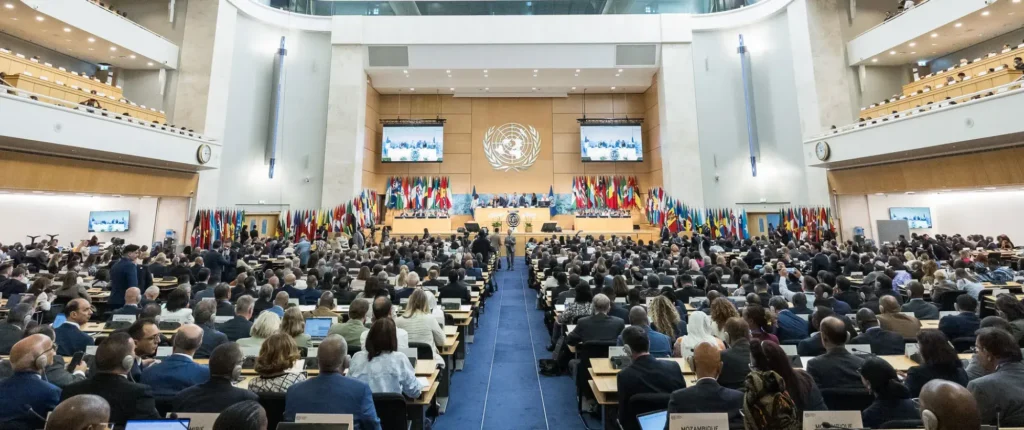
On 12 June, the 114th International Labour Conference (ILC) closed with the adoption of Convention No. 193, the world’s first binding international labour standard for the platform economy. It passed 406 votes to 8. The ILO had been arguing about how to regulate jobtech platforms for years, so this was a hotly anticipated moment.
So what did the world’s governments, employers, and workers actually agree on? And what does it mean for jobtech platforms operating in Africa?
If your platform connects people to paid work, you’re in scope. The final instrument covers any company that “organises and/or facilitates work performed by persons for remuneration or payment, for the provision of service, upon request of the recipient or requestor.” The final instrument, however, is only a convention, without accompanying recommendations. It is now up to national governments to translate it to domestic law, which is likely to take time and some more wrangling.
A win-win scenario?
Workers got real protections, and platforms are not being asked to operate under frameworks designed for the factory floor of 1950. This includes:
- Minimum wage standards apply regardless of formal employment classification.
- Algorithmic management is included in a binding international instrument for the first time ever. Platforms must now disclose automated decision-making, and appropriate human involvement is required when a worker faces automated deactivation. Challenges to deactivation decisions must be based on “unlawful” rather than “unjustified” grounds, which means not every disputed deactivation becomes a liability.
Platforms also saw none of the most hostile provisions make it in the convention:
- A blanket reclassification of all platform workers as employees won’t happen. The convention explicitly accommodates employees, independent contractors, and any third classifications that member states choose to create.
- The remuneration provisions cover active engagement, not idle time. An Uber driver waiting for a ping isn’t automatically entitled to be paid for that wait. For platforms with large, distributed workforces, this reinforces the commercial viability of their model.
- Platforms must be transparent about how automated systems affect workers, but they don’t have to hand over the code. Trade unions won’t be able to demand algorithmic explanations or reasons from companies, which protects commercially sensitive data.
- Earlier convention drafts implied that automated decision-making systems inherently cause occupational health and safety risks, but the final text doesn’t go there. Such language would have opened platforms to liability simply for using algorithms.

Frida Mwangi, Kenya
Chair of Kenya Union of Gig Workers and advocating for digital worker rights
For over a decade, there has been a grey area that has been used to exploit workers. What this convention does is remove that grey area. The first win is the definition of what a platform is. The second is that every worker, regardless of their classification, is mandated to have basic work rights. It does not matter what platforms put on their contract, whether it is an independent contractor, or partner, or however they put it.
If they are in the definition of what a platform worker is, then it does not matter how they are classified. They are required to have these rights. They are supposed to have collective bargaining, freedom of association, and all that.
Another win is around safety. Fundamental rights in terms of safety now mean that algorithm management has to have a human review. It has also given power to workers to decide when to take work or not if they feel their safety is being threatened. Right now, especially for app drivers, when you cancel a ride because where you are supposed to go is not safe, the chances of being deactivated are high. Meaning you have to keep taking these trips regardless of your safety. What this convention has done is ensure that the worker has that right.
Now there is a part that could feel like a scary part for platform workers, and that is where it says governments can decide which categories to exclude. Most of the time, platform owners would say you are regulating this space too much, so we are just going to pack and leave, and that means your people will not have work.
But if a government decides to do that, it will be putting itself on a list of shame. It has to write down exactly why it decided to do this, and it has to include a whole representation of the tripartite to agree. It is progressive. It is not that if they decide today to exclude a category, then it is permanent. There has to be progressive reporting.
What that means is that a government that decides to do this will be telling its people that it is on the side of the platform owners rather than the workers. It might be a bit shameful for a government to be seen not protecting its own people. So that part, as scary as it sounds, actually has teeth.
Now the big work begins. What the ILO has done is give us the blueprint. We need to use that blueprint and come back to Kenya and build our home. We need to build our home to align with those laws. The ratification requires only two countries, meaning the work for gig workers, unions, associations, and movements has just begun.

Jahni de Villiers, South Africa
Director of Labour Amplified and involved in the negotiation on behalf of platforms
The convention successfully balances the realities of global business with the modern platform economy. The final text evolved into a flexible, principles-based framework that explicitly acknowledges the positive role digital platforms play in formalising work and supporting micro, small, and medium-sized enterprises (MSMEs).
Crucially for business operations, the Convention formally recognises legitimate independent contractor models, ensuring that statutory minimum wages and expense mandates are applied strictly to formal employment relationships rather than self-employed workers.
Furthermore, the agreement fosters continued technological innovation by requiring “appropriate human involvement” rather than burdensome strict human reviews for algorithmic management, while also providing robust new legal protections for platforms’ commercially sensitive information and trade secrets. By clarifying that user deactivations must be based on “unlawful” rather than subjective “unjustified” grounds, the convention provides crucial legal certainty, ultimately ensuring that the global platform economy can continue to drive innovation and create flexible earning opportunities worldwide.
Formalisation is a big deal
One outcome has been underreported in most of the commentary we’ve seen. The convention explicitly recognises that platform work contributes to formalisation.
Most platform work in Africa doesn’t fit neatly on either side of the formal/informal divide. The instinct in some regulatory circles has been to treat platform work as an extension of informality: a way for companies to avoid labour protections by routing work through apps. This convention treats platforms as critical to bringing informal workers into structured economic participation.
For the 30-88 million Africans projected to earn income through jobtech by 2030, this framing shapes a whole lot: from how governments extend social protection, to how investors assess regulatory risk, to how platforms make the case for their own social value.
The convention process repeatedly surfaced the notion that the platform economy looks very different in London, Lagos, or Jakarta. That perspective was actively represented throughout the negotiations, and the Jobtech Alliance has played a role in helping African government and business association representatives at the negotiations to better understand the unique platform contexts, opportunities and challenges.
What next for platform work in Africa?
The convention isn’t self-executing. Countries ratify, then implement through domestic law, which means ratification will be patchy. For example, the US and New Zealand voted against, the UK and India abstained. Platforms and workers will feel the effects gradually, market by market.
For platforms in particular, the next steps (at least from our point of view) are pretty clear:
- Use the formalisation framing. We now have a binding international instrument that says platform work is a pathway into the formal economy. That’s an advocacy tool that can be used across the board, with governments, investors, and workers.
- Engage early. The countries that move first will set implementation precedents. Those precedents are worth shaping. Engaging in national dialogue and consultation processes while the frameworks are still being written is critical. The platforms that engage with these norms proactively will have more credibility in regulatory conversations than those who show up defensive after the fact.
- Start implementing now. The convention’s operational requirements are clear enough to start acting on. Minimum wage standards apply to all platform workers regardless of classification. Review what automated decision-making you disclose to workers and where the gaps are. If an algorithm can deactivate a worker, a human needs to be reachable to review it; you can make sure your deactivation criteria are legally defined, not just commercially sound.
We’ll be tracking how this plays out in the months to come. If you’re working through the implications and want to discuss, get in touch.